
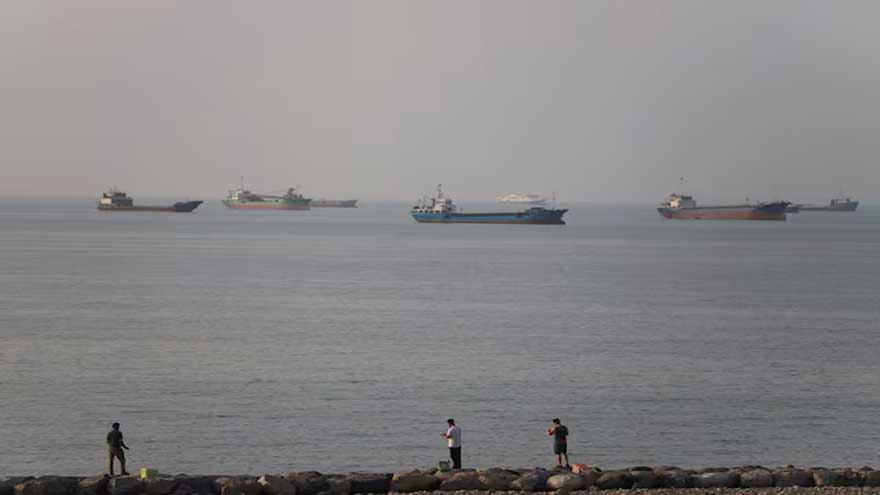
Summary Five vessels passed the strait on Sunday, from 26 ships spotted a day earlier, data from analytics firm Kpler showed
SINGAPORE (Reuters) – The number of ships that passed through the Strait of Hormuz fell sharply on Sunday after Iran announced it had again closed the waterway, citing Israeli and US violations of the interim peace deal, shipping data showed.
Five vessels passed the strait on Sunday, from 26 ships spotted a day earlier, data from analytics firm Kpler showed. These included three Very Large Crude Carriers carrying 2 million barrels of Saudi crude and fuel oil each, one of which was heading to Japan. The data may exclude vessels that switch off their transponders while travelling in the Gulf.
Iran lifted its effective blockade of the strait last week after agreeing with the United States to extend an April ceasefire for 60 days to allow for peace negotiations, but Tehran's Islamic Revolutionary Guard Corps on Saturday declared the waterway shut once again in response to Israeli strikes in Lebanon. The US military said commercial vessels were still operating.
Among the ships that exited the strait on Saturday, three of them were VLCCs carrying crude from the United Arab Emirates, Kuwait and Iraq while there were also three tankers carrying various oil products, the data showed.
A total of 13 ships entered the strait on Saturday, including two VLCCs, the data showed.
Gulf producers Abu Dhabi National Oil Co and Kuwait Petroleum Corp have issued tenders selling crude with the option of loading from inside and outside the Strait of Hormuz.
Two South Korean-operated vessels passed through Strait
Two vessels operated by South Korea passed through the Strait of Hormuz after the US and Iran signed a memorandum of understanding on a ceasefire agreement last week, Seoul's Ministry of Oceans and Fisheries said on Monday.
The vessels are sailing normally, but have not yet fully exited a high-risk zone, the ministry said, declining to disclose further details on the vessels.
The ships do not have South Korean crew on board and are not bound for South Korea, the ministry said.
A total of 22 South Korean-operated ships remain stranded in the Strait of Hormuz, it said.